Why Natural Beef Middle Casings Are Not Edible
Sausage Casings
Casings can be divided into two groups:
- Natural casings.
- Synthetic casings.
It is incommunicable to match the quality of natural casings. They can be used for almost whatsoever product. The biggest reward of using natural casings is that they shrink as with the meat and thus are slap-up for making dry or semi-dry salami or sausages. That leaves their utilise to smaller butchers or sausage makers and information technology is the preferred choice for a home producer. Another reward is that they are edible and you don't fifty-fifty feel them when eating a well fabricated smoked sausage.
The main reason that commercial manufacturers cannot utilize natural casings is the fact that they are not uniform and have a different diameter, texture and length. They also accept a tendency to produce a curved sausage, especially beef rounds. The meat plant fifty-fifty knowing the length of the sausage, cannot precisely estimate the weight of meat information technology contains and by the same token cannot arrive at the correct price. And you cannot run a business when no ii samples are alike. Natural casings are usually packed and stored in salt. Before utilise they should be rinsed on the exterior and flushed out with water inside. And so they should exist left for xxx minutes in a water filled container. That removes more salt from the casings and makes them softer and easier to work with when stuffing. Natural casings are commonly obtained from pigs, cattle and sheep and tin can be by and large classified as:
| Small intestine casings | Large intestine casings | Other |
|---|---|---|
| squealer and sheep casings, beef rounds (runners). | grunter and beef middles, bungs. | tummy, bladder. |
Sus scrofa Casings
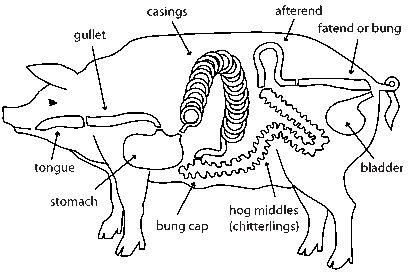
| Casings | Middles | Bungs or fatends |
|---|---|---|
| xxx-32 mm, frankfurter, breakfast sausage, Italian sausage. | 45 - 50 mm, Italian salami (frisses), blood sausage, sopressata. | 50 - xc mm, Liver, Braunschweiger. |
| 32-35 mm, bratwurst, bockwurst, Italian sausage. | 50-60 mm, dry out salami, liver sausage. | |
| 35-38 mm, knockwurst, Polish sausage, bratwurst, pepperoni. | 60-70 mm, cooked Braunschweiger. | |
| 38-44 mm, Polish sausage, summertime sausage, ring bologna, liverwurst, pepperoni. |
Hog Casings are sold in "bundles" or "hanks." This unit of measurement of measure equals approximately 91 meters. I bundle of 38 mm casing volition adjust well-nigh 132 lbs. (60 kg) of meat.
Beefiness Casings
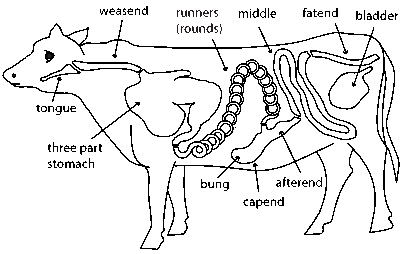
| Rounds | Middles | Bung Caps |
|---|---|---|
| 35-46 mm, Ring Bologna, Ring Liver, Blood Sausage, Smooth Sausage, Holsteiner. | 45-65 mm, Bologna, Dry and Semi-dry out Cervelats, Dry and Cooked Salami. | 76-126 mm, Large Bologna, Lebanon Bologna, Cooked salami, Mortadella. |
Beef casings are tougher than hog casings and should exist soaked in water longer. When making fermented sausages beefiness casings also have a higher trend to become slimy during fermentation or the drying stage. This is a pocket-sized inconvenience and the slime is only wiped off.
- Beef rounds - are the pocket-sized intestines and derive their name from their feature "ring" or "round" shape.
- Beef middles - are the large and straight intestines.
- Beefiness bungs - are used for making large sausages like mortadella or large bologna.
- Beef bladders - are the largest casings and will concord up to 14 lbs. (half-dozen.5 kg) of sausage. They are used for mortadella, pepperoni and minced ham sausages.
Sheep Casings
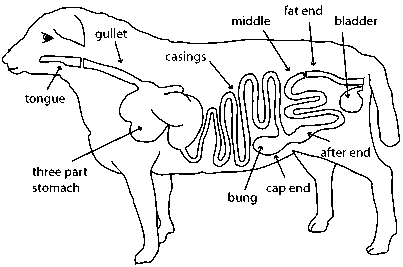
Sheep casings are the highest quality small diameter casings used for sausages such as: Bockwurst, frankfurters, wieners, Polish Kabanosy and breakfast sausage links. These casings combine tenderness with sufficient strength to withstand the filling, cooking and smoking operations. Their diameter varies from xviii - 28 mm.
For a hobbyist natural casings are hard to beat. They are tender, they can exist used for whatsoever blazon of a sausage, and volition last almost indefinitely when salted and kept under refrigeration. Natural casings can exist reused even if they have been soaked. Just apply regular tabular array common salt to the casings, identify them in an air tight container such as a zip-lock and air-condition. Don't freeze as this will harm their structure and will weaken them.
Typical use for natural casings
Grunter casings
- Small casings - fresh sausage, Bockwurst, Polish sausage, frankfurters, and chorizos.
- Hog middles - are the large intestines of a hog, also chosen chitterlings. They are used for making dry sausages.
- Hog bungs - are the colon of the sus scrofa. They are used for liver sausage and dry out sausages such as milano, gothaer, and salami arles.
- Hog stomachs - head cheese.
- Sus scrofa bladders - luncheon meats.
Beef casings
- Round (small casing), center, and bung (blind cease).
- Bladders - lunch meats and mortadella.
- Rounds - band bologna, holsteiner, mettwurst.
- Middles - bologna, cervelat, blood sausage.
- Weasands (the lining of the esophagus or passage to the stomach) - long bologna and salami.
Sheep casings
- Casings - meat sticks, kabanosy, wieners.
Annotation that beef and sheep possess a three function stomach making information technology difficult for use. Pork stomach consists of a one chamber with two entrances and has been traditionally used for making head cheeses. I opening would be sewn with butcher'south twine, the casing would be blimp and the second opening would exist sewn off.
Constructed Casings
Bogus casings are inedible and don't require refrigeration. They tin be made in a variety of colors and diameters. White casings can be used for liver sausage, ruby for bologna, some casings come pre-printed, for case casings with deer antlers can exist used for sausages made from wild game meat. Before use cellulose casings and other artificial casings should be immersed for 30 minutes in room temperature water to facilitate stuffing. Constructed casings are directly, consistent in diameter, require less preparation and are easier to stuff. Those are good reasons why they are used by commercial manufacturers.
| Name | Description | Use |
|---|---|---|
| Collagen | 16-140 mm made from collagen which is the primary ingredient of connective tissue, skin and bones. The casings are fabricated from beef hides. There are several types of collagen casings on the market today. There are edible casings for making fresh and smoked sausages. Can be used for smoked or stale sausages. | Edible: breakfast links, wieners, frankfurters, fresh sausages. Non-edible: ring style sausages, salami, practiced substitute for beefiness middles. |
| Cellulose | fifteen-44 mm stiff, can exist used for smoked or air dried sausages. | Non-edible: skinless hotdogs and frankfurters. |
| Fibrous | 38-198 mm come in unlike colors and are popular amongst processors who don't smoke sausages with natural forest only instead add liquid fume. A mahogany colored casing looks like if it were smoked. Casings showroom splendid permeability for smoke penetration and moisture evaporation and can exist used for smoked or dried sausages. | Non-edible: summertime sausage, salami, pepperoni, bologna. |
| Plastic | eighteen-152 mm provide barriers to moisture, smoke and oxygen to maximize shelf life and minimize off flavors of prepared foods. They tin be used for cooked products such equally liver sausage, ham or cooked salami. Can NOT be used for smoked or stale sausages. | Non-edible: Liver sausage, Mortadella, Cooked Salami. |
| Hukki | 40-200 mm bachelor in different net patterns for a traditional expect of the products. Hukki are fabricated as collagen (edible and non), cellulose, fibrous or plastic casings and the definition does not imply a new material only an unusual and decorative shape of the casing. | Non-edible (plastic): for cooked products. Edible: (fibrous) for smoked or dried products. |

Source: https://www.meatsandsausages.com/sausage-making/stuffing/casings

Postar um comentário for "Why Natural Beef Middle Casings Are Not Edible"