Forbidden Dying for Love Fruit of the Family Tree Cast
1 / 10
Why You Demand an Arborist
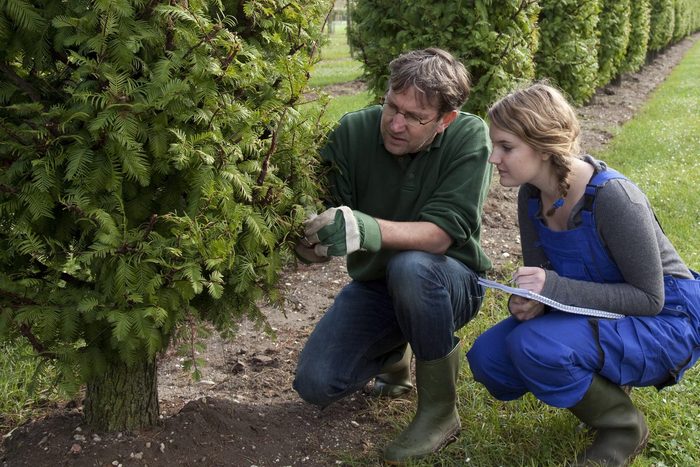
If yous're having trouble with your trees or woody shrubs, the first call you should make is to an arborist.
A certified arborist has specialty education in copse and the latest information on how to establish, care for, diagnose, treat and remove trees. They too accept access to critical safety gear and powerful tools, plus the license to apply certain chemicals, such as fungicides, to assist salvage a tree.
Trees can exist stoic. Many times when signs of distress show upwards, a trouble has been brewing for a while. So while you can follow best practices for planting and maintaining the health of your trees, often major piece of work — or at least specialized knowledge — is needed to prolong a tree's life or cease the spread of a tree disease. Here are the signs to expect for.
ii / 10
Dieback
When an arborist consults about your tree, they do a pinnacle-to-bottom assessment, then yous might too, too.
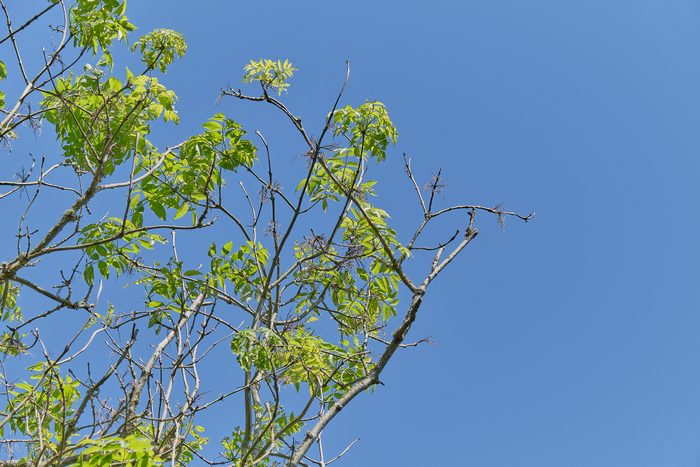
Start with the pinnacle of the tree, known as the crown. Are leafless branches sticking out of the leaf awning? That's called dieback, says Lou Meyer, arborist with The Davey Tree Expert Company. "(It's) almost a sure sign that there's a root issue cloak-and-dagger," he says.
Those issues vary. Experienced arborists can tell you if it's root compaction, a fungus or poor soil conditions. If so, there are few methods to endeavor to save the tree. This is common with argent maples, he says, just tin touch many species.
three / 10
Oozing Sap or Sawdust
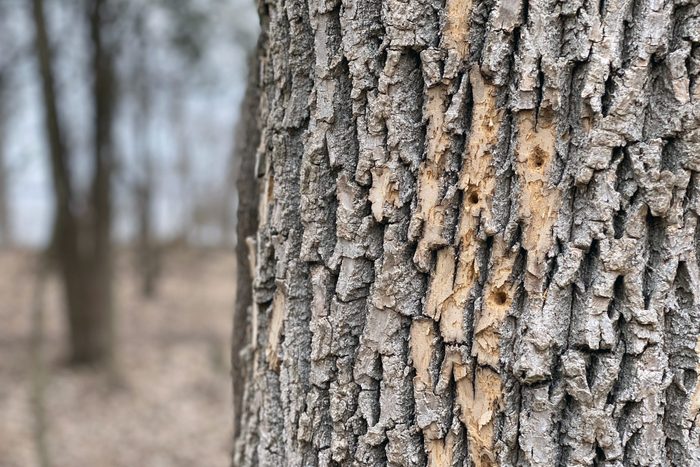
If you see sap oozing downwardly the trunk from specific holes that resemble knife wounds, there's a proficient take a chance y'all accept a borer insect problem. (Note: Some trees, such as elms, ooze sap normally; it's non a sign of danger.)
Yous may be nearly familiar with the emerald ash borer, which lays its eggs in the tree, lives in the cambium (institute tissue), creates tunnels inside it and so essentially starves the tree. Almost all untreated ash trees with emerald ash borer infestations will die.
Because emerald ash borers can compromise the physical structure of the tree, a professional should handle the tree'south treatment or removal. And although emerald ash borers may be the most notorious, other insects can infest a tree that will exit oozing sap, sawdust or sawdust tubes in their wake.
"Any sawdust is a bad thing," Meyer says. That'due south a reason to call your arborist.
4 / 10
Mushrooms or Fungus
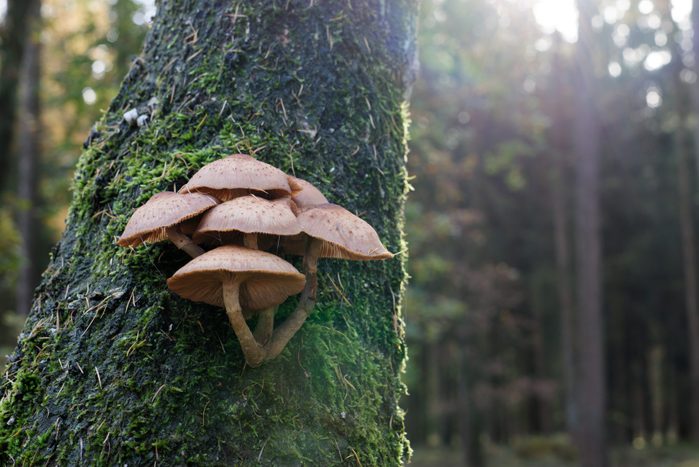
If you meet mucus on a tree trunk, there'southward a practiced chance you have a decay outcome. Fungus is about often muted tan in color, but tin can besides be orangish or cherry-red. "Saprophytes (a plant, fungus, or microorganism that lives on dead or decomposable organic thing) feed on decay and if you run into them yous'll know there is inner disuse on that co-operative," Meyer says.
Sometimes arborists tin can expertly remove limbs with the promise the disuse hasn't spread, and/or use fungicides to slow the spread. There are some species that almost always have shelf fungi on the trunk, Meyer adds, such as locust copse. So don't immediately panic, but exercise call your tree specialist.
Other fungi might not look like a traditional mushroom, and vary by species. Randy Nelson, a certified arborist with Monster Tree Service, says a fungus commonly appears on Colorado Blue Spruces planted outside their U.S. Section of Agronomics Constitute Hardiness Zone. It shows up as black spots on the needles, or even as dieback.
v / 10
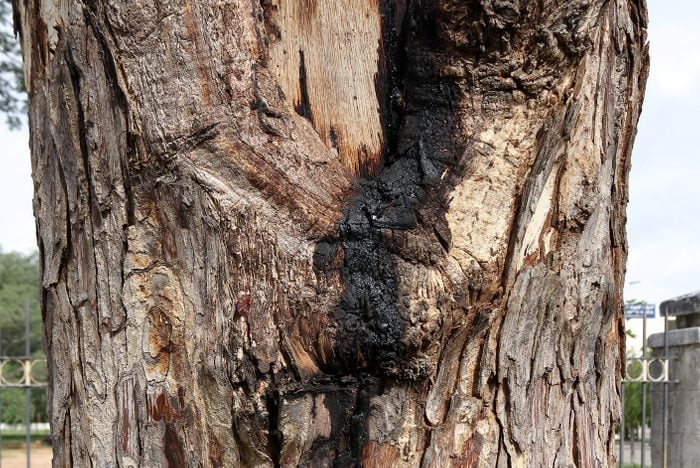
Sloughing Bark
Bark sloughing off the body is often a sign of decay, oft from a fungus, Meyer says. Some species do naturally shed their bark, such a sycamore, crepe myrtle or river birch.
If you tin can see silverish or white plating under the bawl — a sort of scale that looks similar a expressionless lesion — that's a sign of a canker disease called hypoxylon.
With hypoxylon, you may also see some sap oozing downward the body. It's zippo you lot tin can treat yourself, and often tin can't be cured. Merely with assessment and treatment, you lot may go along the tree's good for you parts going and extend the tree'southward life.
6 / 10

Black Lesions
If a spring season is peculiarly wet, black spots or lesions may appear on a tree'southward leaves. "This is more of a fungus related to high moisture," says Nelson.
Depending on the tree species and time of year, some systematic pruning to thin out the awning and create more air movement may help. Also, sometimes chemicals can be helpful. "This is normally more than of a cosmetic issue," says Nelson, "but information technology can stress the tree out if it happens repeatedly."
Your tree might not be doomed to certain death in this instance, but care should be taken to go on it good for you and prolong its natural life.
7 / 10
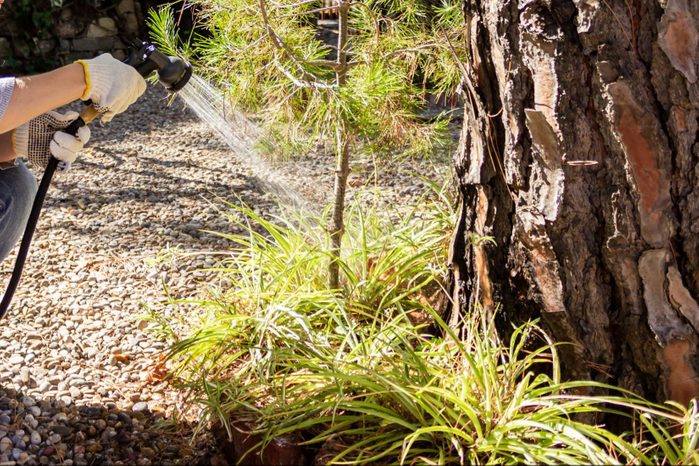
Scorching, Browning or Drooping
People think lawn sprinkler systems are expert enough for watering trees. Oft, it's non, Nelson says, especially in drought conditions. That water doesn't accomplish tree roots, and if y'all have turf grass it competes for that h2o.
He suggests using black soaker hoses. If you don't accept one, put your garden hose on a small trickle and allow it soak slowly for a full day. Place it a couple of anxiety out from the trunk merely inside the dripline of the tree (from the body to the outer edges of the trees branches), rotating evenly around the tree.
"Trees on average, need an inch of h2o per calendar week," Nelson says. "Sometimes trees don't show scorching, browning or drooping leaves or branches immediately, but they show upwards next twelvemonth or the year after that, especially on bigger trees."
Smaller or younger trees may prove stress signs within the aforementioned flavour. Trees and leaves can too droop when they're overwatered, so keep a careful sentry on which i may exist causing the problem.
eight / 10
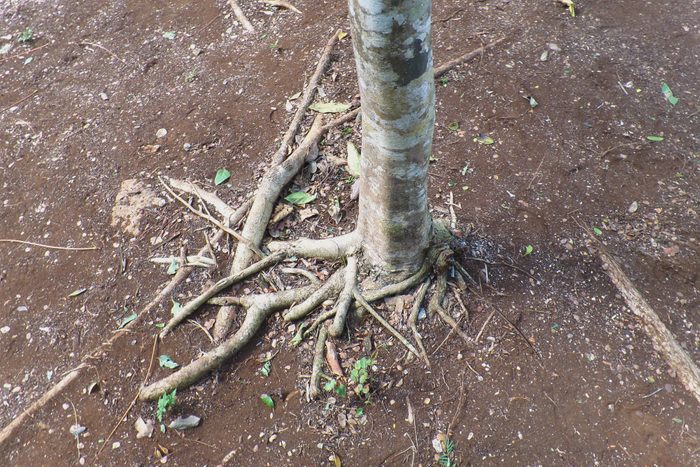
Flagpole Torso
If your tree trunk doesn't flare where it meets the ground, so it looks similar a telephone pole or a flagpole, your tree may take been improperly planted. That tin can cause issues like girdling roots that grow in a circular or screw pattern effectually the torso or at or below the soil line, gradually strangling the trunk. That considerably shorten the life of your tree.
"You lot want the root flare at the bottom just higher up grade so you tin can come across that swelling at the base," Nelson says. "If you catch it, arborists can excavate soil away and provide root pruning."
9 / 10
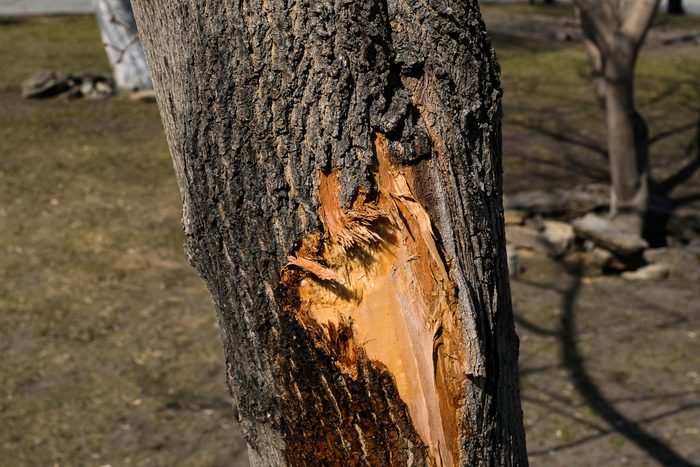
Trunk Wounds or Cracks
Trees frequently accept a beating. Think about that boulevard tree someone backed into trying to park, or the UPS truck repeatedly striking a branch as information technology makes deliveries downward the street. "That's an effect and an opportune entry place for disease," says Meyer.
This is a particularly hot topic with deliveries during the pandemic: Limbs struck one time a calendar week now may get hit four to v times a day. That tin can cause structural damage, impair the tree and eventually imperil people and belongings if it comes loose.
Too, storms can evangelize blows to an otherwise healthy tree. Large cracks in the trunk or bark are signs of structural harm that need to exist addressed.
Lastly, horizontal cracks are a red flag also. These signal the woods fibers are breaking and cracking, and the tree might autumn.
10 / ten
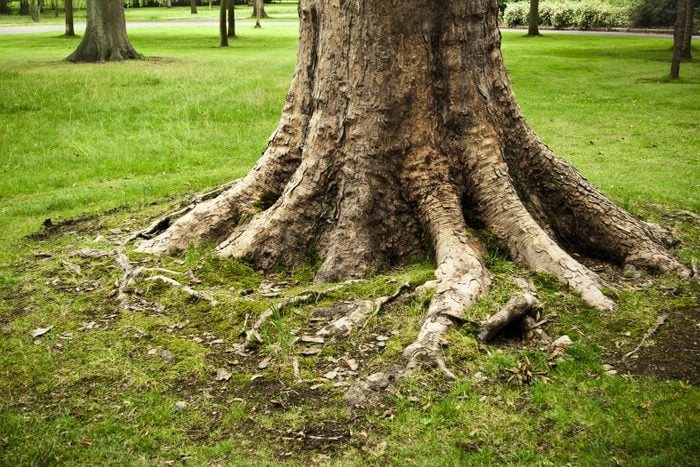
Heaving Roots
Exposed roots tin be a problem. While some species' root systems hang out about the ground'due south surface, Meyer says virtually aren't that visible. Heaving roots tin exist a sign that the tree doesn't have plenty space to abound.
Signs of heaving soil, which Nelson says ofttimes happens after a heavy rain or dangerous weather, are besides a reason to telephone call an arborist. Sometimes smaller trees can exist uprighted or staked, but an arborist can assess whether the tree is stable or needs to come up downwards.
Originally Published: August twenty, 2021
Source: https://www.familyhandyman.com/list/tree-dying-signs/

Postar um comentário for "Forbidden Dying for Love Fruit of the Family Tree Cast"