hth max 70 sock it shock treatment
Welcome to our discussion on swimming pool shock, specifically, when should one shock the pool, and how much do I need to add?
Shocking the pool with chlorine is the raising of free chlorine levels in the pool to such a high level that every living thing in the water is killed by cell disruption. I liken the process to a lightning bolt ripping through the water, and perhaps that's why it's called shocking the pool.
Why Shock the Pool?
There are three reasons to shock a pool. We like to call it theABCs of Pool Shocking.
- Algae:Chlorine is a great algaecide.
- Bacteria:Chlorine kills bacteria, when dosed properly.
- Chloramines:Chlorine breaks apart combined chlorine molecules.
1). Kill Algae

Chlorine is a great algaecide. Pool shock, in the right amounts, will destroy all types of algae by slashing through their slimy outer shells and disrupting their cellular processes. Pink, green, yellow — none is a match for chlorine, in the right amounts.
Shocking the pool to 30 ppm of free chlorine residual, in the presence of proper pH levels, will destroy most algae. For best results, vacuum the pool before shocking and brushed after shocking. Filter nonstop, backwashing as needed, and use pool clarifier if needed.
Algae can require large amounts of chlorine for a complete removal. It depends on the severity of the algae bloom and other factors, such as high pH and stabilizer levels, or a very warm water temperature, the amount of organic debris in the pool, and the effectiveness of the pool filtration and circulation. Light-colored or isolated algae may only require 10 ppm to eradicate, while medium blooms may need double the dose. For dark green or yellow algae blooms, adding enough pool shock to reach 30 ppm may be necessary.
A less calculated approach is to balance the chemistry, clean the pool, and shock until the water turns a blue-gray color. When shocking the pool to remove algae, it's best to not hold back, but rather hit it hard. Using mechanical methods is usually necessary: brushing the walls and floor, vacuuming and backwashing to remove algae cells from the pool and flush them out of the system.
2). Kill Bacteria

A pathogen is a disease-causing substance. Bacteria, viruses and parasites can live in pool and spa water. Your normal sanitation and filtration likely removes most pathogens, but if you want to be sure, a good pool shock is in order.
Heavy use, an extended period of low or no chlorine, or if the water has not been filtered for some time — all are good reasons to shock the pool.
The amount of shock needed to remove pathogens is dependent upon the level of pathogens in the water. You can test for bacteria with a bacteria test kit, or you can just shock the pool to 30 ppm.
Bacteria, fungus, protozoa, viruses and even parasites can enter the pool water from swimmer waste or from organic contaminants. Chlorine pool shocks in the correct amount kill these organisms by attacking the cell wall, which exposes vital cell constituents and terminates cell function.
How much chlorine is needed to kill bacteria in swimming pools? It depends on the type of bacteria and the extent of the contamination. Most types of bacteria found in pools, such as E. coli or pseudomonas, are fairly easy to kill with just 2-3 ppm of chlorine. However, the CDC recommends that for pool fecal incidents involving diarrhea, maintain a level of 20 ppm for 13 hours to eliminate protozoans, such as Crypto.
3). Destroy Chloramines
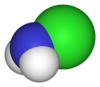
Free available chlorine (FAC) is an attractive target for ammonia and nitrogen that get into the pool water. When combined, FAC becomes ineffective as a sanitizer and causes eye irritation, or red eyes.
Although it seems counter intuitive, when your pool smells strongly of chlorine, chloramine bonds are likely at a high level, and a good pool shock is needed. There is another way to determine chloramine levels, however.
Using a DPD test kit will allow you to measure both FAC and total available chlorine (TAC). Subtraction of free from Total will yield the amount of combined available chlorine (CAC), commonly known as chloramines. When a level of 0.3 ppm is reached, a good pool shocking is indicated.
Shocking the pool to a level that is 100 times greater than your chloramine is effective at chloramine removal. For a level at 0.3 ppm CAC, add enough chlorine to reach a level of 30 ppm in the pool.
Chloramines, also known as combined chlorine, occur when a chlorine molecule combines with ammonia or nitrogen in the pool water. The attachment makes the molecule sluggish and it becomes ineffective as a sanitizer. Furthermore, it becomes irritating to skin and eyes, and makes the water smell.
Raise the chlorine level in your pool high enough and you will break apart these chloramine bonds, removing chloramines from the water. To effectively remove chloramines, many sources say that you need 10 times the amount of combined chlorine, but for complete removal I may double that amount to compensate for stabilizer (cyanuric acid) levels, or after active pool use, or when treating algae.
To determine the presence of chloramines, a DPD test kit is used, along with a little formula. First measure for free chlorine (FC) and then add another reagent to test for total chlorine (TC). If the sample gets darker in the test vial, this shows a difference between total and free chlorine. Subtracting free from total yields combined chlorine (CC).
For example: If we test free chlorine at 1.0 ppm and find our total chlorine is 1.4 ppm, the difference is 0.4 ppm of combined chlorine. FC-TC=CC. Now, how much chlorine is needed to shock the pool for chloramine removal? Some would say that the calculation is just 10 times the amount of chlorine. But this is primarily based on monochloramine removal and does not account for pH level, the level of stabilizer, or cyanuric acid in the water.
Here's a real world chart to shock the pool for chloramine removal. Use it to figure out how much pool shock to use based on your level of combined chlorine in the water. Remember this chart assumes a good pH, and a relatively low CYA level. More shock is needed for higher levels of stabilizer in the pool, and for pH levels above 7.5.
Amount of Chlorine to Reach Breakpoint Chlorination
(Assumes pH of 7.5, CYA of 30 ppm)
Dosage per 10,000 gallons:
| Chloramine Level | Cal Hypo | Clorox | Dichlor | Lithium Hypo |
| 0.1 | 15 oz | 150 oz | 18 oz | 28 oz |
| 0.3 | 45 oz | 450 oz | 54 oz | 84 oz |
| 0.5 | 75 oz | 750 oz | 90 oz | 130 oz |
You'll also need to know your pool size in gallons, and do some math to multiply these amounts (based on 10,000 gallons) for the size of your pool. Oh, and in case you have forgotten, there are 16 ounces to a 1 pound bag of shock, and 128 ounces in a gallon of bleach.
Amount of Chlorine to Reach Desired Concentrations
(Assumes pH of 7.5, CYA of 30 ppm, Temperature 75ºF)
Dosage per 10,000 gallons:
| Desired Chlorine Level | Cal Hypo | Clorox | Dichlor | Lithium Hypo |
| 10 ppm | 21 oz | 228 oz | 25 oz | 39 oz |
| 20 ppm | 42 oz | 455 oz | 35 oz | 78 oz |
| 30 ppm | 63 oz | 683 oz | 60 oz | 117 oz |
Like our charts mention, 20 ppm requires a good pH level and a relatively low level of cyanuric acid. A tepid temperature of 70-80 degrees is also assumed. High pH, high stabilizer or high temperatures will require a higher concentration of chlorine and/or a longer reaction time to effectively remove bacteria in swimming pools.
How Much Pool Shock Do I Need?
Breakpoint chlorination is a level of chlorine at which point molecular bonds break apart. Conveniently, this is also the point at which chloramines, algae and pathogens are removed from the water.
For most situations, a level of 30 ppm of chlorine will reach the threshold of breakpoint chlorination needed to restore order in the pool.
Here's a pool shock treatment chart to determine the amount of pool shock necessary to raise the chlorine level above the breakpoint threshold, which is usually around 30 ppm.
This quick reference chart is based on 10,000 gallons of water:
| Pool Shock Type | Increase by 10 ppm |
| Calcium Hypochlorite | 1.3 lbs |
| Sodium Hypochlorite | 3.5 qts |
| Lithium Hypchlorite | 2.5 lbs |
| Dichlor | 1.5 lbs |
For example, using the table above, a 20,000 gallon pool would require 7.8 lbs of Cal-Hypo to increase the levels by 30 ppm.
Not using enough chlorine to not quite reach breakpoint may not have the desired full effect.
Check for proper water balance, especially pH in the range of 7.2-7.6, before adding the shock to the pool. High pH of 7.8-8.2 can render up to half of your pool shock completely inactive.
Proper filtration and circulation deserve some mention as well; pool shock doesn't do it all alone. Filter the pool water to remove the microscopic remnants of organic matter that is destroyed.
How to Shock the Pool
- Clean the pool. Leaves and debris on the floor and surface will waste your chlorine's killing power as it attacks these organic materials, rather than the ABC problem that we are trying to correct.
- Lower the pH. Chlorine is very sluggish at high pH levels. At a pH of 8.0, less than half of the chlorine you add to the water will convert to hypochlorous acid, the killing form of chlorine. Lower the pH to 7.2 before shocking.
- Read the label. We have eight different types of pool shock, all with slightly different dosages. For some pool shock, dilution in a bucket is necessary to dissolve the granules and prevent damage to pool surfaces.
- Add the shock. Distribute the granular chlorine throughout the pool surface with the pool pump running. Be careful not to spill any on your clothing or the pool deck and don't broadcast it into the wind!
- Brush the pool. This helps to distribute the chemical and removes the layer of dust and film on your pool surfaces, which may allow some contaminants to escape treatment. A good brushing, vacuuming and backwashing should follow an algae shock treatment.
Pool shock can also be used in smaller amounts as a quick booster to your chlorine level. This practice I call super chlorination. Usually just a pound of shock will bring chlorine levels up from zero to a range that will prevent problems. Waiting for tablets to dissolve could take too long, so if you find your chlorine level at zero, use a pound or two of pool shock to bring up the chlorine level quickly.
The moral of the story is that you have to test your pool to know when to shock. Shocking monthly or even weekly is overkill in many cases.
hth max 70 sock it shock treatment
Source: https://blog.intheswim.com/pool-shock-when-how-much/

Postar um comentário for "hth max 70 sock it shock treatment"